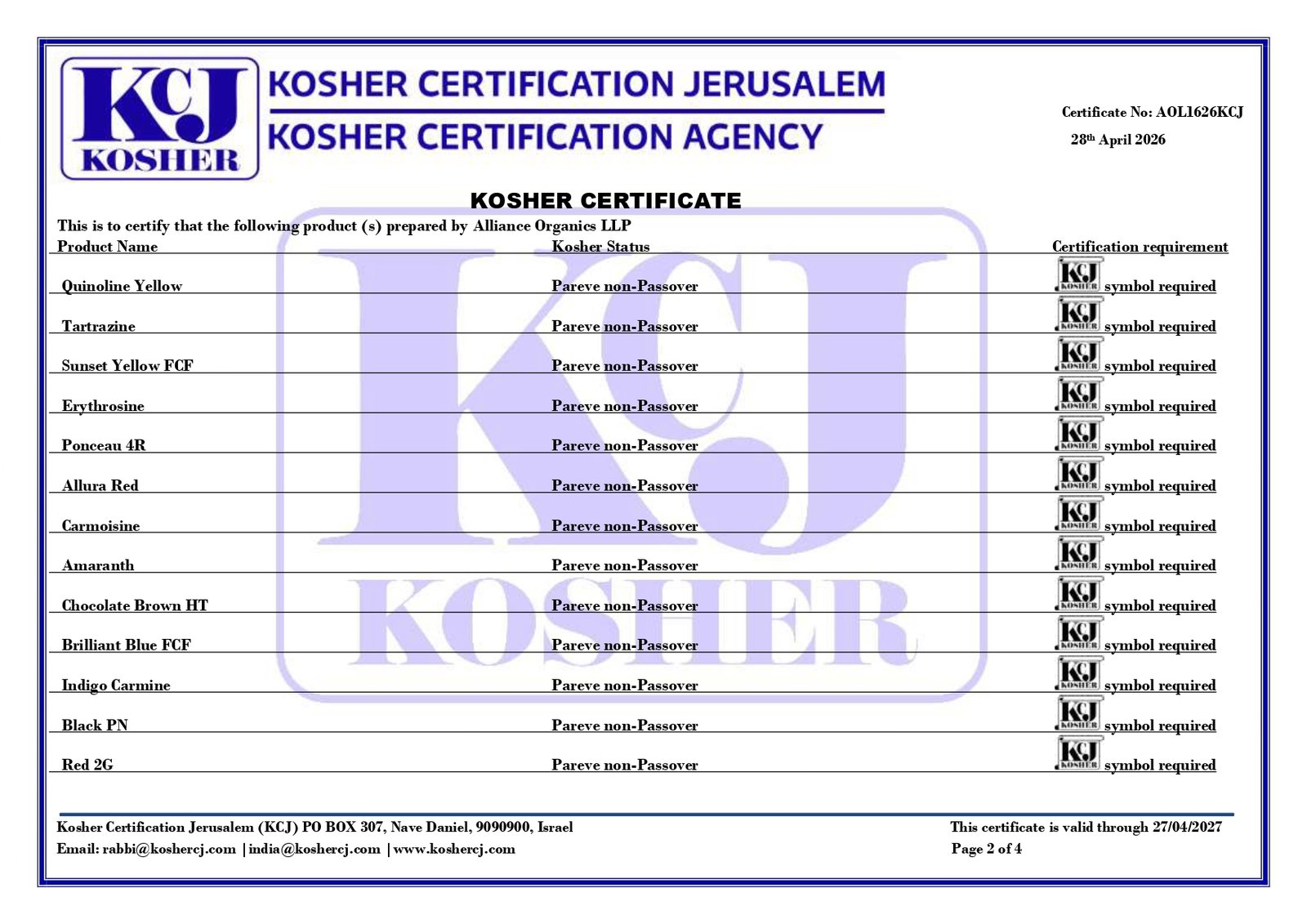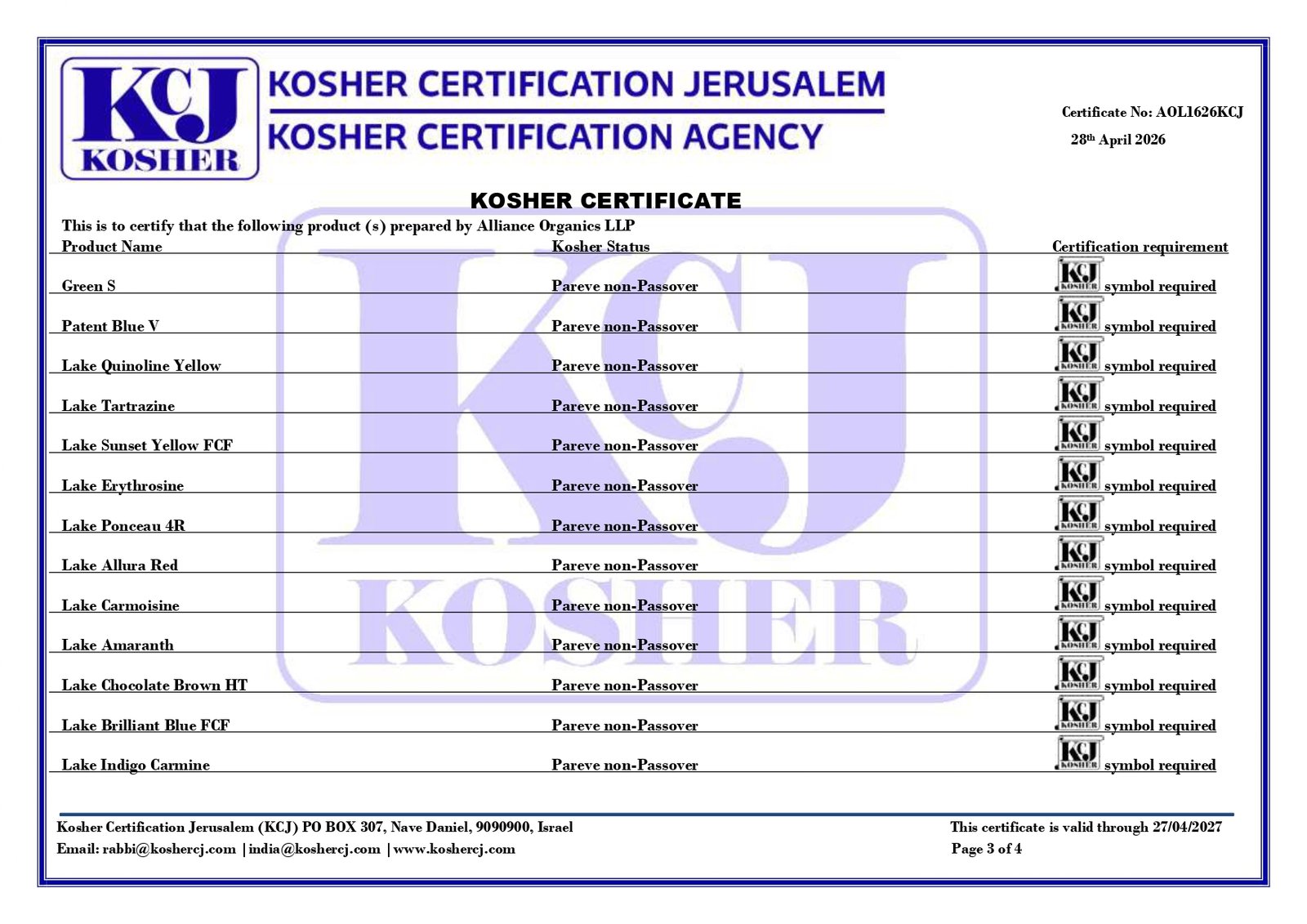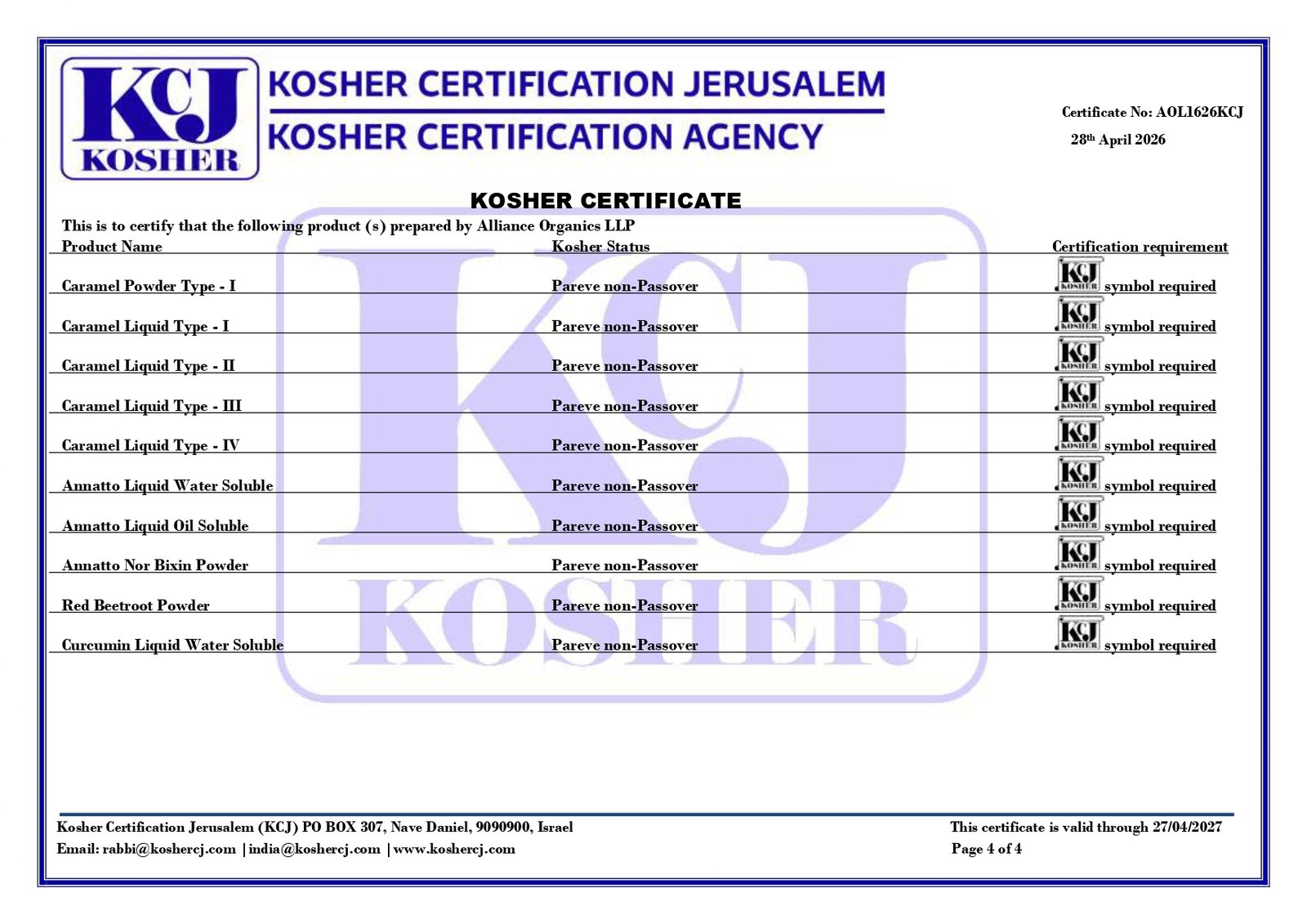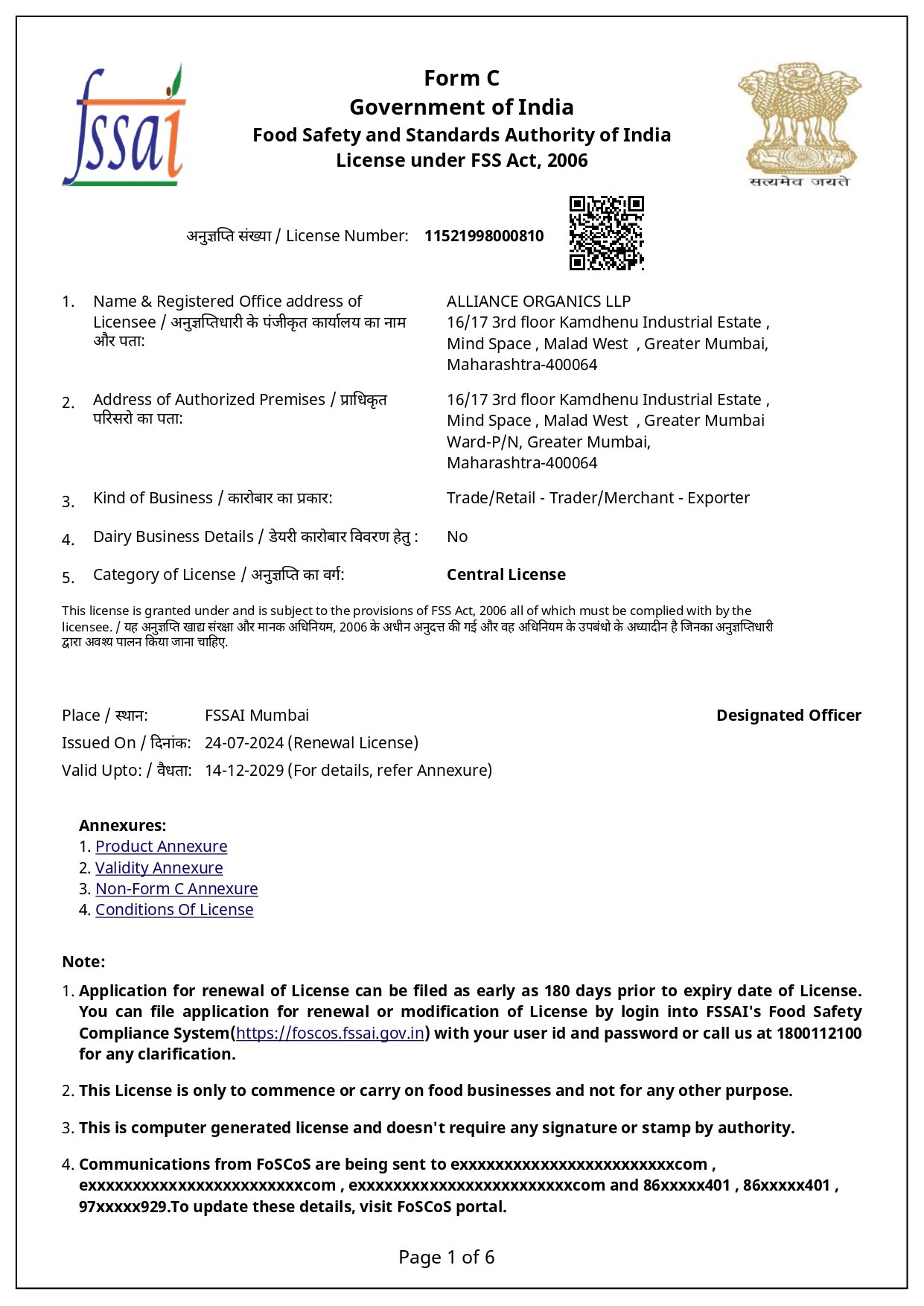


Alliance Organics LLP is a leading manufacturing company for food colors in India. Known for being a renowned producer in the synthetic food coloring segment, our main objective is producing and exporting globally, various types of Food Colors. We customize water soluble blend of colors, in accordance with the customer’s requirement.
Food Colors manufactured and distributed by Alliance Organics LLP, are incorporated for the preparation of eatables like ice creams, dairy products, confectionery, beverages, pet food, and cosmetics (Lipstick, Powder, Talcs, Lotions, Creams). We extend our offerings, to the oral medicinal sector for the production of capsules, tablets, syrups and liquids, to give them a pleasant look and appearance. Being an international exporter and supplier, USA, China, Indonesia, Russia and Brazil are our major supporters.
These are a water soluble variety, that’s available in powder form. Also termed as artificial food colors, our synthetic food variants are processed & manufactured chemically. Our food colors have high utilitarian value & are mostly used as dyes for food, pharmaceuticals, cosmetics & other industries. We maintain strict international standards and adhere to all the checks.
Food colours have become an essential component of the food industry because the appearance and presentation of food are critical factors in its consumption. In the present world, people tend to eat with their eyes first, and the visual appeal of food influences their decision to consume it.
Food manufacturers add food colours to enhance the appearance of food and beverages and make them more visually appealing. The colours used in food and drinks include red, yellow, green, blue, purple, and other shades. Food colours by Alliance Organics LLP are used in various food products, such as candies, baked goods, beverages, and processed foods.

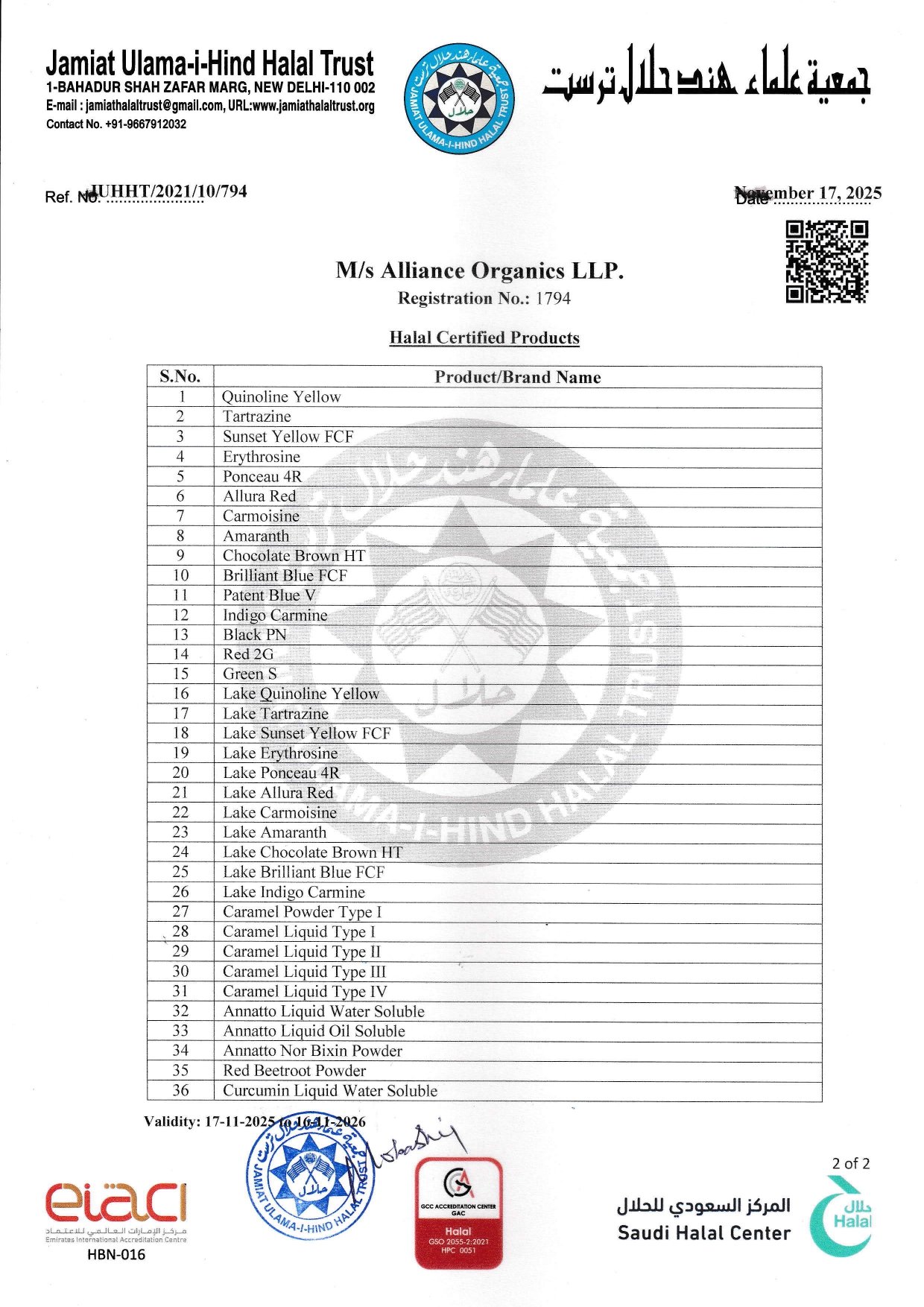
Food colours can be made from either natural or synthetic ingredients. Natural food colours are derived from fruits, plants, and vegetables. Synthetic colours, on the other hand, are made from chemicals. The commonly used synthetic food colours produced by Alliance Organics LLP are Red 40, Yellow 5, and Blue 1. Natural food colours are obtained from sources like beet juice, turmeric, and spirulina.
Feed Industry
Colourants in Pet Food
Writing inks for Special Applications
Paper Industry
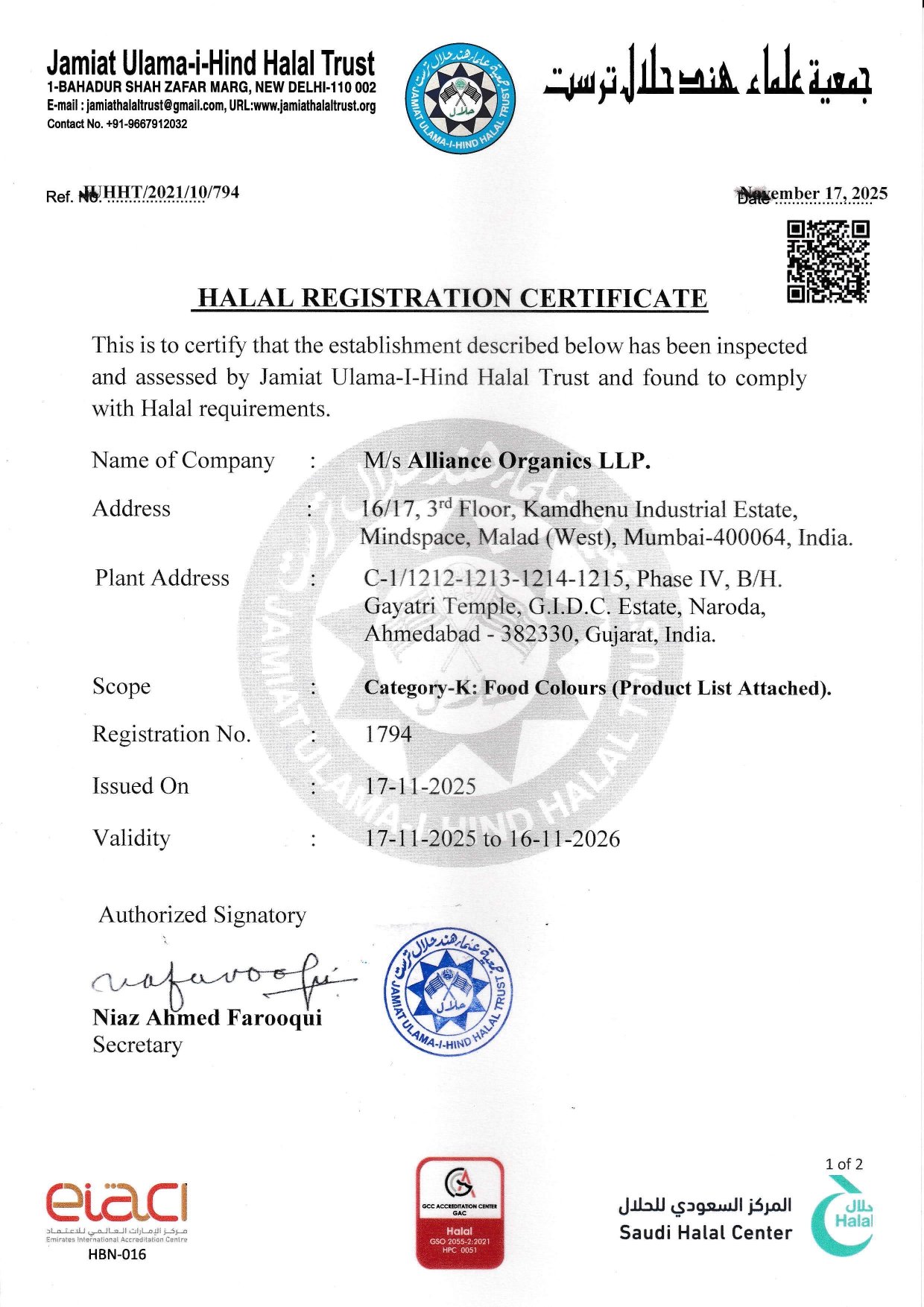
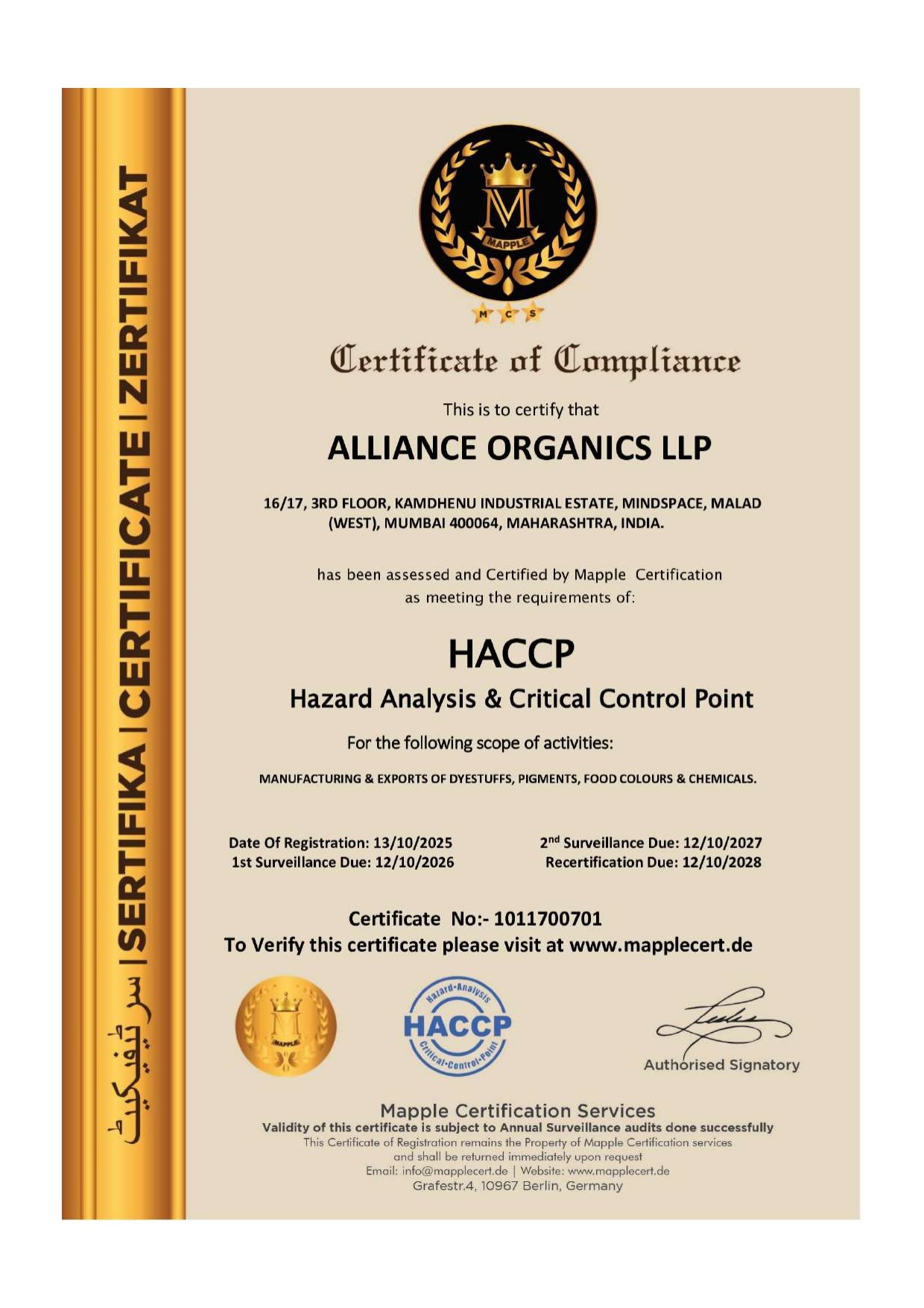
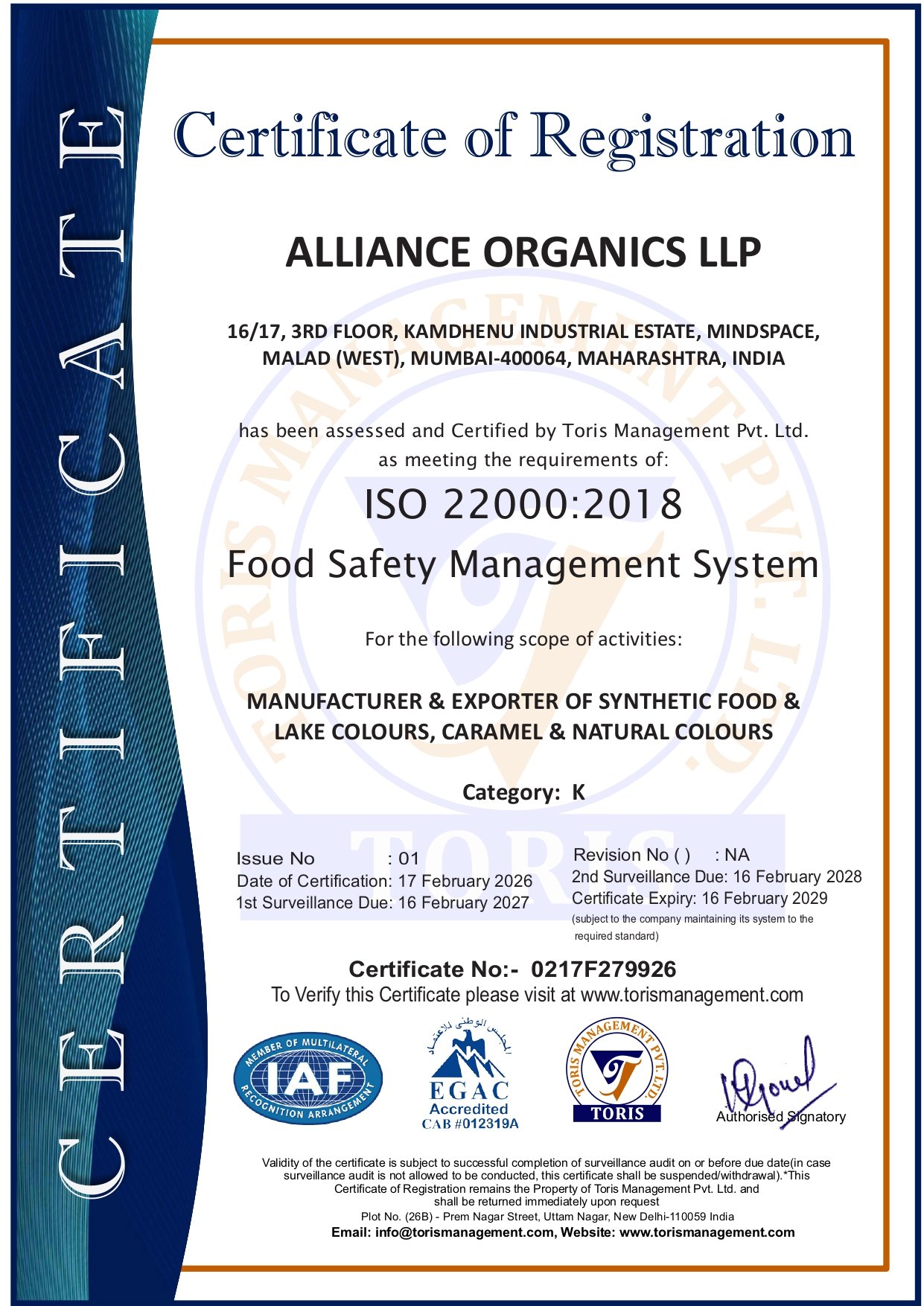
Various organizations, including the Food and Drug Administration (FDA), regulate food colours. The FDA has implemented rigorous guidelines for manufacturers to follow to guarantee the safety of their products. Moreover, several countries have regulations which manufacturers must comply with to sell their products in those countries like US FDA and JEFCA Standards
Allocol™ Quinoline Yellow
Quinoline Yellow
| E 104
CI No: 47005
Dye Content: Min. 70%
Applications: Cosmetics • Food & Beverages • Seed Coating • Industrial Coloring
Allocol™ Tartrazine
Tartrazine
| E 102
| F.D & C. No. Yellow 5
CI No: 19140
Dye Content: Min. 87%
Applications: Cosmetics • Food • Pharmaceuticals • Beverages
Allocol™ Sunset Yellow FCF
Sunset Yellow FCF
| E 110
| F.D & C. No. Yellow 6
CI No: 15985
Dye Content: Min. 87%
Applications: Cosmetics • Food • Pharmaceuticals • Beverages
Allocol™ Erythrosine
Erythrosine
| E 127
| F.D & C. No. Red 3
CI No: 45430
Dye Content: Min. 87%
Applications: Cosmetics • Food • Pharmaceuticals • Beverages
Allocol™ Ponceau 4R
Ponceau 4R
| E 124
CI No: 16255
Dye Content: Min. 82%
Applications: Cosmetics • Food • Beverages
Allocol™ Allura Red
Allura Red
| E 129
| F.D & C. No. Red 40
CI No: 16035
Dye Content: Min. 87%
Applications: Beverages • Cosmetics • Food • Pharmaceuticals
Allocol™ Red 2G
Red 2G
| E 128
CI No: 18050
Dye Content: Min. 80%
Applications: Food • Beverages
Allocol™ Carmoisine
Carmoisine
| E 122
CI No: 14720
Dye Content: Min. 87%
Applications: Food • Beverages • Cosmetics
Allocol™ Amaranth
Amaranth
| E 123
CI No: 16185
Dye Content: Min. 87%
Applications: Cosmetics • Food • Pharmaceuticals • Beverages
Allocol™ Chocolate Brown HT
Chocolate Brown HT
| E 155
CI No: 20285
Dye Content: Min. 70%
Applications: Food • Pharmaceuticals • Beverages
Allocol™ Brilliant Blue FCF
Brilliant Blue FCF
| E 133
| F.D & C. No. Blue 1
CI No: 42090
Dye Content: Min. 87%
Applications: Cosmetics • Food • Pharmaceuticals • Beverages
Allocol™ Patent Blue V
Patent Blue V
| E 131
CI No: 42051
Dye Content: Min. 85%
Applications: Pharmaceuticals • Beverages • Medical Diagnostics • Food
Allocol™ Indigo Carmine
Indigo Carmine
| E 132
| F.D & C. No. Blue 2
CI No: 73015
Dye Content: Min. 85%
Applications: Food • Pharmaceuticals • Beverages • Medical Diagnostics
Allocol™ Black PN
Black PN
| E 151
CI No: 28440
Dye Content: Min. 80%
Applications: Beverages • Cosmetics • Food
Allocol™ Green S
Green S
| E 142
CI No: 44090
Dye Content: Min. 80%
Applications: Cosmetics • Food • Beverages